World Leaders Face Pressure Over Rising Food and Fuel Costs
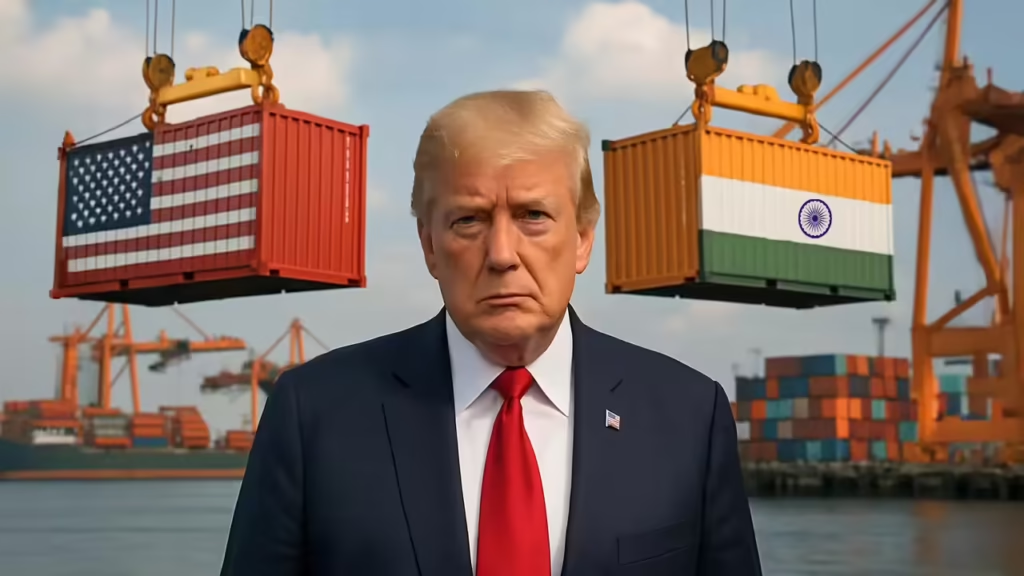
World leaders are facing mounting pressure as rising food and fuel costs continue to strain household budgets and fuel public frustration across both developed and developing economies.
In recent weeks, inflation driven by higher energy prices, supply chain disruptions, and climate-related shocks has pushed the cost of basic goods higher, hitting lower-income households the hardest. Food staples such as grains, cooking oil, and vegetables have seen noticeable price increases in several regions, while fuel costs remain volatile amid ongoing geopolitical tensions.
Governments across Europe, Asia, Africa, and Latin America are under growing scrutiny as voters demand relief measures to ease the cost-of-living crisis. Protests and strikes have been reported in multiple countries, with citizens calling for subsidies, tax cuts, and stronger price controls to protect consumers.
Energy costs remain a major driver of inflation. Fluctuations in oil and gas prices have fed into transport and manufacturing expenses, pushing up prices across supply chains. Analysts warn that continued instability in global energy markets could prolong inflationary pressures well into the coming months.
Food security has also emerged as a key concern. Extreme weather events, conflict-related disruptions, and rising fertiliser costs have reduced agricultural output in several regions, tightening global food supplies. International agencies warn that vulnerable populations face heightened risks of hunger and malnutrition if prices continue to rise.
Central banks are closely monitoring the situation as governments weigh fiscal support against the risk of worsening inflation. While some countries have introduced targeted subsidies and cash assistance programs, economists caution that broad price controls could strain public finances and distort markets.
Political leaders are also grappling with the global dimension of the crisis. Coordinating responses across borders has proven challenging, particularly as nations prioritise domestic stability amid slowing economic growth.
“Rising food and fuel costs are not just an economic issue — they are a political one,” said one policy analyst, noting that prolonged cost-of-living pressures could reshape elections and policy agendas worldwide.
As inflation remains stubborn and global uncertainty persists, world leaders face growing demands to deliver swift and effective solutions to ease the burden on households.
For more such articles, please follow us on LinkedIn and Instagram.