Laura Fernandez Declares Victory in Costa Rica’s Presidential Election
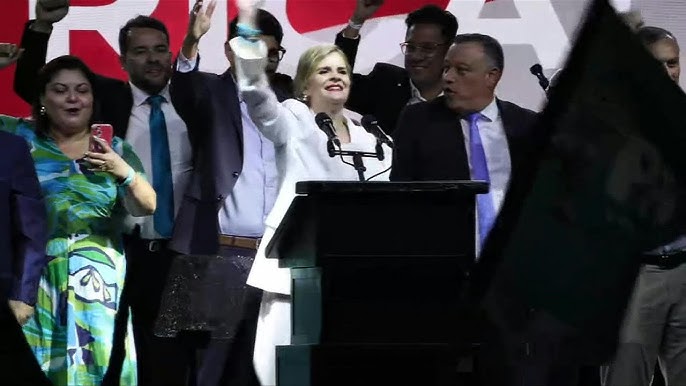
SAN JOSÉ, Costa Rica — Laura Fernández has declared victory in Costa Rica’s presidential election following preliminary results showing her clear lead and surpassing the threshold needed to win in the first round.
Fernández, the 39-year-old candidate from the ruling Sovereign People’s Party (PPSO), secured a decisive victory in Sunday’s vote, avoiding a runoff after surpassing the 40 % minimum requirement established by Costa Rican law. With a strong showing across the majority of polling stations, Fernández’s tally ranged around nearly half of all votes counted, significantly ahead of her closest rival, centrist economist Álvaro Ramos of the National Liberation Party (PLN).
Her success marks a continuation of the political project led by outgoing President Rodrigo Chaves, who is constitutionally prohibited from immediate reelection but publicly supported Fernández throughout the campaign. Fernández, a former cabinet minister and close ally of Chávez, framed her victory as a mandate for security, reform, and political stability in a nation facing rising concerns over crime and governance.
In her victory speech, Fernández emphasized the start of a new political chapter, announcing what she termed a shift toward a “Third Republic,” aimed at addressing the country’s most pressing challenges. She also pledged to include voices from across the political spectrum, signaling her intent to govern broadly rather than solely through her base.
The election drew widespread attention not only within Costa Rica but across Latin America, where similar conservative and security-focused leaders have gained ground in recent years. Voter turnout was robust, reflecting widespread public engagement with issues ranging from public safety to economic opportunity.
Analysts say Fernández’s administration will be closely watched as it takes office, particularly regarding her proposed security agenda and potential reforms to judicial and institutional frameworks. The international community, including regional leaders, has already acknowledged her victory, underscoring Costa Rica’s role as a stable democracy in Central America.