EU Leaders Push Forward Mercosur Trade Pact Despite Environmental Concerns
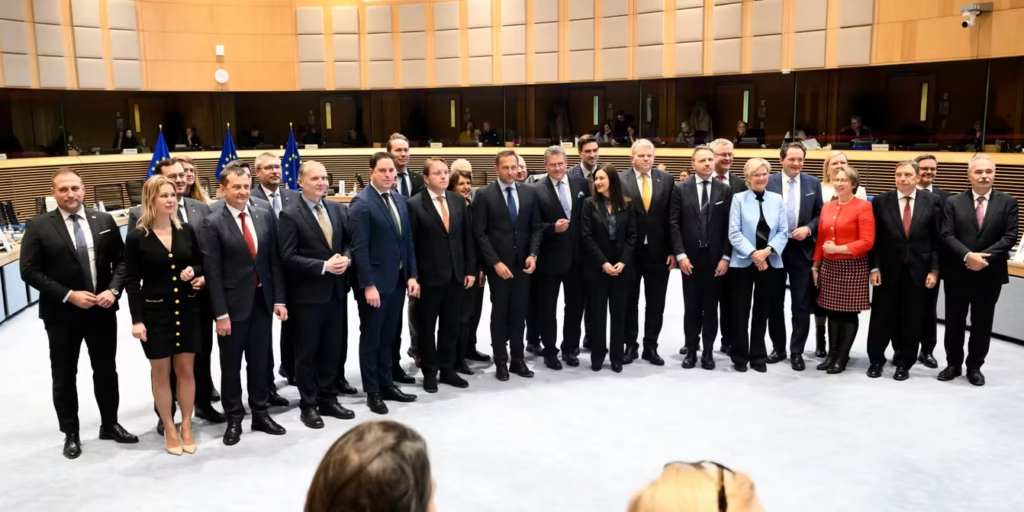
European Union leaders have moved a step closer to finalizing key international trade agreements, including the long-debated EU–Mercosur pact, signaling a renewed push for economic cooperation even as environmental groups raise strong objections. The development follows high-level talks in Brussels, where EU officials emphasized the need to strengthen global trade ties in an increasingly uncertain economic climate.
The Mercosur agreement, which would link the EU with South American nations Brazil, Argentina, Uruguay, and Paraguay, is expected to create one of the world’s largest free-trade zones. Supporters say the deal could unlock billions of euros in trade, boost European exports, and give businesses on both sides of the Atlantic greater access to new markets.
However, the pact has long faced resistance, particularly from environmental organizations and some European farmers. Critics argue that increased agricultural trade could accelerate deforestation in the Amazon and weaken environmental protections in South America. Several EU member states have previously delayed ratification, citing concerns over climate commitments and sustainable development.
In response, European leaders say the latest version of the agreement includes stronger safeguards. EU Commission officials confirmed that new environmental clauses and enforcement mechanisms are being added to ensure that trade growth does not come at the cost of climate goals. “Trade and sustainability must go hand in hand,” a senior EU diplomat said. “This agreement reflects that balance.”
The timing of the renewed push is significant. With global supply chains under strain and geopolitical tensions reshaping international commerce, the EU is looking to diversify its trade partnerships and reduce dependence on a small number of major markets. Analysts say the Mercosur deal fits into a broader strategy to secure economic resilience while maintaining Europe’s influence on global trade standards.
Reactions across Europe remain mixed. Business groups welcomed the progress, calling it a long-overdue step toward competitiveness. Environmental activists, meanwhile, warned that promises of protection must be matched by strict enforcement. “Without real accountability, these clauses risk becoming symbolic,” said a spokesperson for a leading climate organization.
As negotiations move into their final phase, the debate highlights a central challenge for policymakers: how to balance economic growth with environmental responsibility. The decisions made in the coming weeks could shape not only Europe’s trade future, but also its credibility as a global leader on climate action.
For more such articles, please follow us on LinkedIn and Instagram.