Scientists Confirm 2025 as One of the Hottest Years on Record Despite Cooling Hopes Concerns Persist Globally
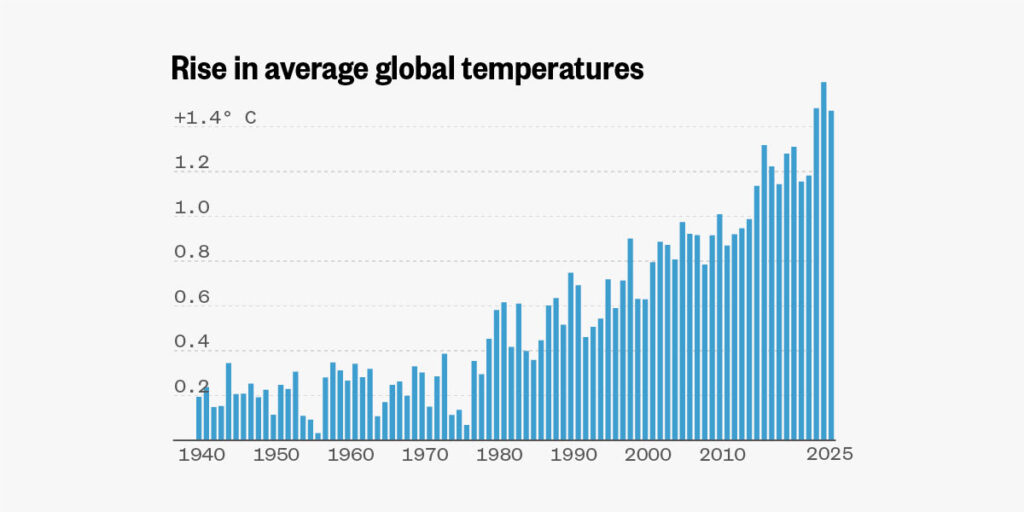
Global climate scientists have confirmed that 2025 ranks among the hottest years on record, contradicting earlier predictions of a temporary cooling phase. The announcement, made by leading meteorological agencies, underscores the ongoing challenges posed by climate change and highlights the urgent need for international mitigation efforts.
Data collected from multiple sources, including satellite measurements and ground-based weather stations, indicate that average global temperatures in 2025 were approximately 1.2°C above pre-industrial levels, placing the year firmly among the top five hottest on record. The findings come despite temporary shifts in atmospheric patterns, including weak La Niña conditions, which some experts had hoped would provide short-term cooling.
“The record-breaking temperatures of 2025 show that temporary fluctuations cannot reverse the underlying trend of global warming,” said Dr. Elena Martinez, a climate scientist at the International Climate Research Institute. “We continue to see extreme heatwaves, unprecedented droughts, and more intense storms, all of which are consistent with long-term climate models.”
Regions across the globe experienced significant climate-related impacts. Europe, Asia, and North America reported extreme heatwaves, while parts of Africa and South America faced severe drought and water shortages. Ocean temperatures also hit new highs, intensifying coral bleaching and threatening marine ecosystems.
The scientific confirmation comes ahead of the upcoming United Nations climate talks, where countries are expected to reassess commitments to reducing greenhouse gas emissions. Analysts warn that without stronger global action, the frequency and severity of extreme weather events will continue to rise, posing risks to food security, public health, and economic stability.
Environmental organizations have called the 2025 findings a “wake-up call,” emphasizing that delayed action will increase costs and consequences for future generations. Experts argue that long-term solutions require a combination of renewable energy adoption, carbon reduction strategies, and international cooperation to curb rising temperatures.
As scientists continue to monitor trends into 2026, the data from 2025 serve as a stark reminder: temporary weather fluctuations do not negate the long-term reality of global warming, and urgent, coordinated action remains critical to addressing the climate crisis.