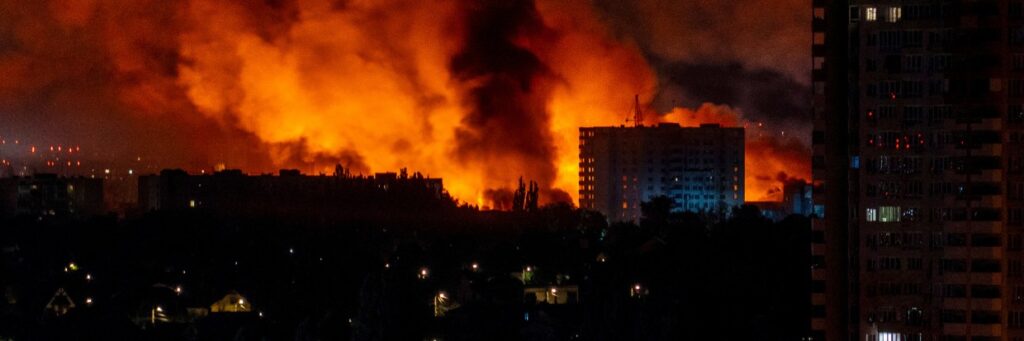
The war between Russia and Ukraine entered a more dangerous phase overnight as Moscow launched one of its largest coordinated missile and drone attacks in recent weeks, hitting multiple cities across Ukraine and sharply escalating tensions in the region. The strikes targeted critical infrastructure, military facilities, and energy sites, leaving several areas without power and raising fears of a prolonged winter crisis for civilians.
Ukrainian officials said air-defense systems intercepted many of the incoming missiles, but confirmed that damage was reported in Kyiv, Kharkiv, Odesa, and parts of central Ukraine. Emergency services were deployed through the night as rescue teams worked to clear debris and restore essential services. Local authorities described the attack as a clear attempt to weaken Ukraine’s energy network and pressure the population during a period of already strained resources.
Russia has not officially detailed the scale of the operation, but state media claimed the strikes were aimed at “strategic military targets.” Western governments, however, condemned the assault, calling it a deliberate escalation that risks widening the conflict. NATO officials said they are closely monitoring the situation, warning that continued attacks on civilian infrastructure could further destabilize Eastern Europe.
The latest escalation comes at a sensitive diplomatic moment, as several countries push for renewed peace talks after months of stalled negotiations. Analysts say the overnight strikes may harden positions on both sides, making a near-term breakthrough less likely. “Each wave of attacks increases the political cost of compromise,” said a European security expert, adding that the conflict is now entering a phase where military pressure and diplomatic efforts are moving in opposite directions.
For civilians, the human toll continues to mount. Families in affected regions spent the night in shelters as sirens echoed across major cities. Aid organizations reported a surge in emergency requests, particularly for heating supplies and medical support.
As the Russia-Ukraine war moves into another year, the overnight offensive underscores a stark reality: despite global calls for restraint, the battlefield remains the primary stage for decision-making. With no immediate sign of de-escalation, the world is once again bracing for the ripple effects of a conflict that shows no sign of slowing down.