Global Refugee Numbers Climb as Wars and Climate Shocks Collide
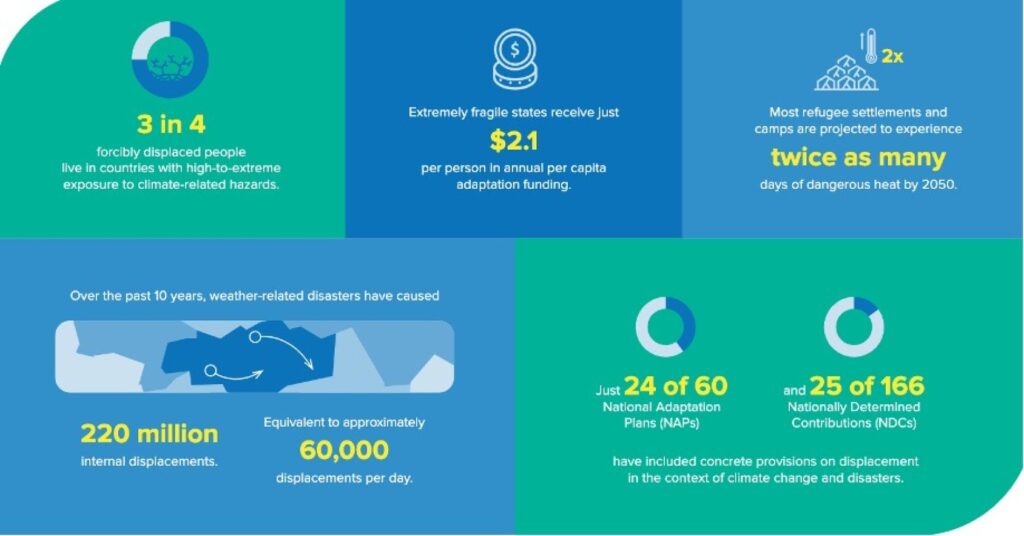
The number of people forced to flee their homes worldwide continues to rise as armed conflicts and climate-related disasters combine to drive displacement on an unprecedented scale, international agencies warned on Thursday.
According to humanitarian organisations, wars in regions such as the Middle East, Ukraine, Africa, and parts of Asia remain the primary drivers of forced migration. At the same time, climate shocks — including droughts, floods, and extreme weather — are increasingly pushing vulnerable communities to leave their homes, often with little warning or support.
The United Nations refugee agency said millions of people are now living in prolonged displacement, unable to return home due to ongoing violence, destroyed infrastructure, or worsening environmental conditions. Many refugees are seeking safety in neighbouring countries, placing heavy pressure on host communities that are often struggling with their own economic challenges.
Climate change has emerged as a powerful force multiplying existing crises. Prolonged droughts have devastated livelihoods in parts of Africa, while floods and storms have displaced families across South and Southeast Asia. In some regions, climate shocks have intensified competition over land and water, fuelling instability and further displacement.
Aid agencies warn that humanitarian systems are struggling to keep pace with growing needs. Funding shortfalls have forced cuts to food assistance, healthcare, and shelter programs, leaving many refugees without adequate support. Camps and temporary settlements are overcrowded, increasing the risk of disease and social tensions.
Children make up a significant proportion of those displaced, facing disrupted education, malnutrition, and psychological trauma. Humanitarian groups stress that without sustained investment, an entire generation risks being left behind.
Governments worldwide are facing difficult political decisions as refugee numbers rise. While some countries have expanded asylum and resettlement programs, others have tightened border controls, citing security and economic concerns. Analysts warn that the lack of coordinated international action is leaving frontline host countries to shoulder a disproportionate burden.
As conflicts persist and climate impacts intensify, experts say displacement is likely to continue rising. Humanitarian agencies are calling for greater international cooperation, increased funding, and long-term solutions that address both conflict resolution and climate resilience to stem the growing global refugee crisis.
For more such articles, please follow us on LinkedIn and Instagram.