Top News Headlines From Southeast Asia as Region Faces Political and Economic Shifts
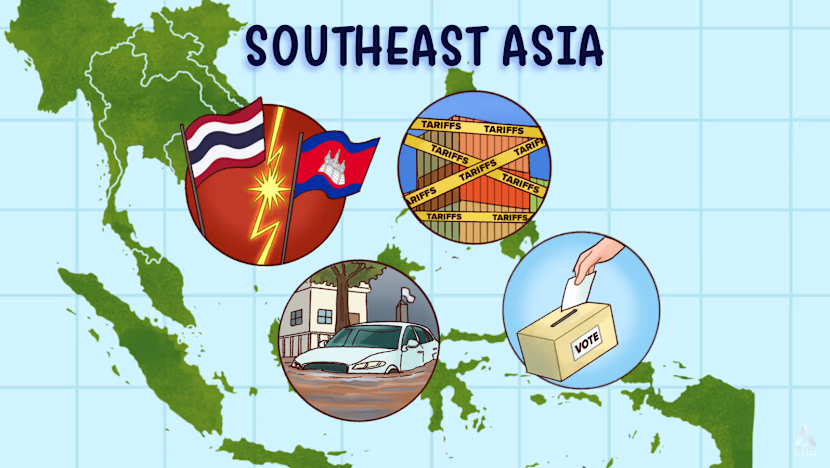
Countries across Southeast Asia began the new year grappling with a mix of political developments, economic challenges, and regional security concerns, as governments move to stabilize growth and address rising public expectations in 2026.
In Myanmar, attention remains fixed on the country’s political transition following the first phase of elections held under military rule since the 2021 coup. Early results indicate strong performance by military-backed parties, drawing criticism from opposition groups and international observers who continue to raise concerns about the credibility of the process and the exclusion of key political voices.
Indonesia is focused on economic priorities as policymakers outline measures to sustain growth amid global uncertainty. Authorities have emphasized infrastructure investment, energy security, and trade diversification as key pillars, while monitoring currency movements and external pressures linked to global interest rates.
In the Philippines, lawmakers returned to session with inflation, food prices, and public transport reforms high on the agenda. The government has pledged targeted subsidies and supply interventions to ease cost-of-living pressures, particularly for low-income households, as public concern over affordability remains strong.
Singapore continues to navigate a cautious economic outlook, with officials warning of slower growth driven by weaker global demand. While the city-state’s labor market remains resilient, authorities have urged businesses to prepare for volatility and accelerate digital and productivity upgrades.
In Thailand, political tensions persist as coalition dynamics remain fragile. Analysts say uncertainty surrounding reforms and budget priorities could weigh on investor confidence, even as tourism numbers show steady improvement during the peak travel season.
Meanwhile, Vietnam has reported steady export activity, supported by manufacturing and electronics shipments, though officials remain alert to risks from slowing demand in major markets. Hanoi has reiterated its commitment to economic reforms and foreign investment to maintain momentum in the year ahead.
Across the region, governments are balancing domestic pressures with broader geopolitical shifts, including regional security concerns and global economic headwinds. As Southeast Asia enters 2026, policymakers face the challenge of sustaining stability while responding to rising expectations at home.
For more such articles, please follow us on LinkedIn and Instagram.