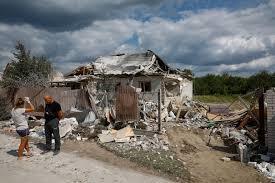
KYIV — In a country long defined by its fight for survival against Russia’s invasion, public expressions of sympathy for Palestinians — once rare and politically sensitive — are increasingly visible in Ukraine, reflecting a subtle but notable shift in public discourse.
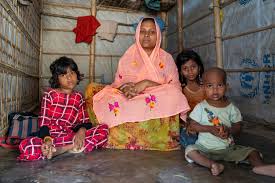
Since Israel’s war in Gaza intensified, Ukrainian social media platforms, university forums, and small civic gatherings have seen a rise in messages calling for civilian protection and humanitarian relief for Palestinians. While Ukraine’s government has maintained firm diplomatic support for Israel, ordinary Ukrainians are beginning to draw parallels between their own wartime experience and the suffering of civilians elsewhere.
Activists and analysts say the change has been gradual but meaningful. Early in the Gaza conflict, public sympathy for Palestinians was often muted, partly due to Kyiv’s strategic alignment with Western partners and Israel’s initial support for Ukraine following Russia’s full-scale invasion in 2022. Open criticism of Israel, or even humanitarian advocacy for Gaza, was sometimes framed as politically risky or potentially exploitable by Russian disinformation.
That caution appears to be easing.
“Young Ukrainians, especially those living under constant air-raid sirens, understand what it means when civilians pay the highest price,” said a Kyiv-based civil society researcher. “For many, empathy no longer feels like a geopolitical statement — it feels human.”
Recent opinion polling shared by Ukrainian think tanks suggests a growing distinction between state-level diplomacy and personal views. While a majority of Ukrainians continue to support close ties with Israel, more respondents now say they believe Palestinian civilians deserve greater international protection, mirroring broader global sentiment.
The shift is also visible in Ukraine’s media landscape. Commentaries and interviews discussing Gaza’s humanitarian crisis are appearing more frequently, often framed through the lens of international law, civilian safety,y and the shared trauma of war rather than ideological alignment.
Still, the topic remains sensitive. Ukrainian officials have avoided public statements that could complicate foreign relations at a time when Kyiv relies heavily on Western military and financial aid. Russia, meanwhile, has sought to portray Ukraine as hypocritical in its stance on civilian suffering, a narrative Ukrainian authorities strongly reject.
For many Ukrainians, however, the conversation is evolving beyond diplomacy. As the war with Russia enters its fourth year, fatigue, loss, ss and constant exposure to violence are reshaping how Ukrainians see other conflicts — and who they feel able to empathize with.
What was once largely unspoken is now cautiously, and increasingly openly, part of Ukraine’s public conversation.