How Trump’s rift with Europe could affect the Russia-Ukraine war
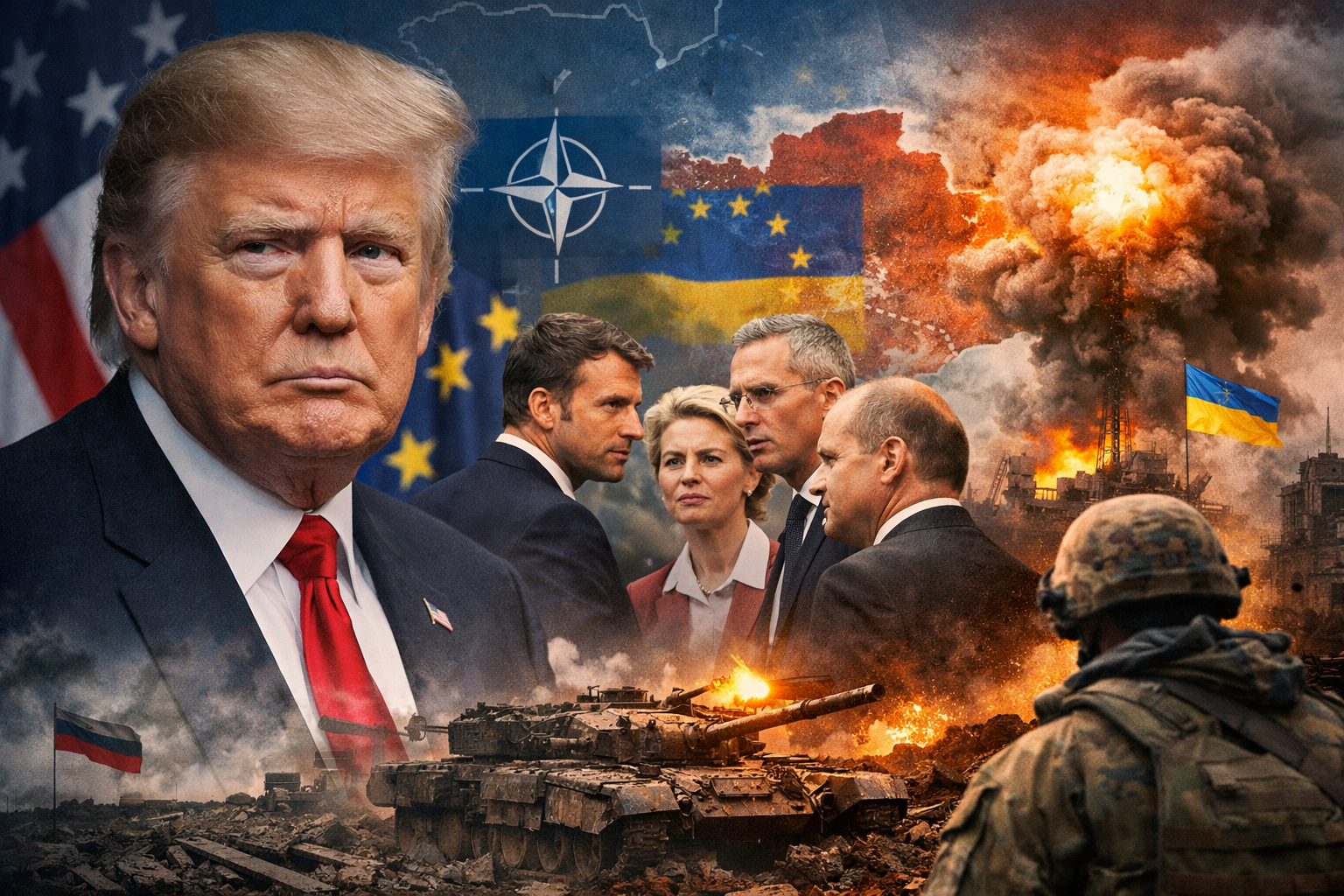
Former U.S. President Donald Trump’s increasingly confrontational stance toward Europe is emerging as a critical factor that could reshape the trajectory of the Russia-Ukraine war, should he return to power. As tensions between Washington and key European allies resurface, diplomats and security experts warn that a weakened transatlantic alliance may significantly alter the balance of the conflict.
Trump has repeatedly criticized NATO members for failing to meet defense spending commitments and has suggested that U.S. support for European security should no longer be unconditional. These remarks have raised concerns across Europe, particularly in countries that view U.S. leadership as essential to sustaining military and financial assistance to Ukraine.
The Russia-Ukraine war has, until now, relied heavily on coordinated Western support. The United States and the European Union have worked closely to provide advanced weapons, intelligence sharing, and economic aid to Kyiv, while maintaining unified sanctions pressure on Moscow. Any visible fracture between Washington and Europe could undermine that unity.
Analysts say Russia could exploit such divisions. A less cohesive NATO would weaken deterrence and potentially embolden the Kremlin to prolong or escalate the war, calculating that Western resolve may falter. European leaders fear that uncertainty over U.S. commitment could slow aid deliveries, complicate long-term defense planning, and reduce Ukraine’s negotiating leverage.
Ukraine, meanwhile, is watching closely. President Volodymyr Zelenskyy’s government depends not only on weapons but also on diplomatic solidarity. A shift in U.S. policy that distances Washington from Europe could force Kyiv to rely more heavily on EU states, many of which already face domestic political and economic pressures.
At the same time, some European governments are quietly accelerating efforts to strengthen independent defense capabilities, anticipating a future where U.S. support may be less predictable. This could reshape Europe’s security architecture but would take years to fully materialize—time Ukraine may not have.
As the war enters a decisive phase, Trump’s rift with Europe is no longer just a diplomatic issue. It is a strategic variable that could influence battlefield dynamics, peace negotiations, and the long-term stability of Eastern Europe. For now, the unity of the Western alliance remains one of Ukraine’s strongest assets—and one of Russia’s primary targets.
For more such articles, please follow us on LinkedIn and Instagram.