New Travel Chaos Leaves Thousands Stranded Across US, Australia and New Zealand
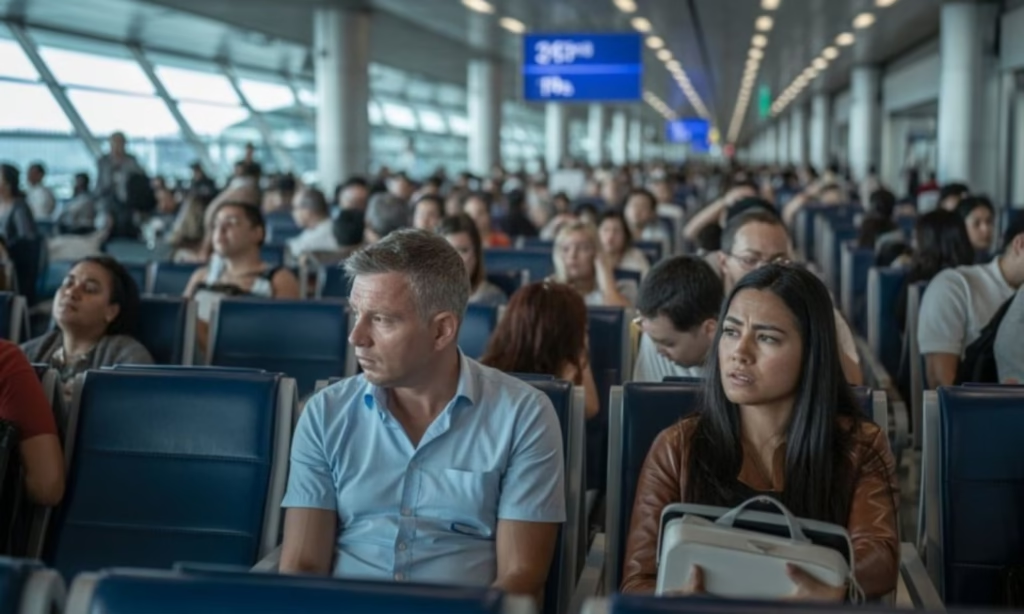
Thousands of travelers have been left stranded across the United States, Australia, and New Zealand after a wave of unexpected border restrictions and accommodation disruptions triggered widespread travel chaos. Airports, transit hubs, and major tourist cities are now grappling with overcrowding as passengers scramble for alternatives.
The disruption began after sudden policy changes and operational issues affected entry procedures in several regions. In some cases, travelers reported being denied boarding due to updated documentation requirements that were not clearly communicated in advance. Others faced last-minute flight cancellations as airlines struggled to adjust schedules.
In Australia and New Zealand, a shortage of hotel rooms has added to the crisis. With major events, peak holiday travel, and delayed flights converging, thousands of visitors have found themselves without confirmed accommodation. Travel agencies say emergency bookings have surged, with prices climbing sharply in key cities such as Sydney, Auckland, and Melbourne.
In the United States, similar scenes have unfolded at major airports, including Los Angeles, New York, and Chicago, where long lines and rebooking delays have left travelers frustrated. Some passengers reported waiting more than 24 hours for alternative flights, while others were forced to arrange costly overnight stays.
Tourism authorities in all three countries have acknowledged the situation and said they are working with airlines and border agencies to ease congestion. However, industry experts warn that the ripple effects could continue for several days as flight schedules stabilize and accommodation backlogs clear.
Travel analysts say the incident highlights growing pressure on global travel systems as international movement rebounds to pre-pandemic levels. “Demand is surging, but infrastructure and coordination haven’t fully caught up,” said one aviation consultant. “Even small disruptions now create major chain reactions.”
For travelers, the advice remains to monitor airline alerts closely, confirm documentation requirements before departure, and secure accommodation as early as possible. Many airlines have issued waivers allowing passengers to change flights without penalty, while several governments have urged travelers to remain patient as officials work through the disruptions.
As thousands continue to wait for clarity and confirmed bookings, the situation has become a stark reminder of how quickly modern travel can descend into chaos and how fragile global mobility remains when systems are stretched beyond their limits.