Global Markets React to Escalating Geopolitical Tensions and Investor Anxiety
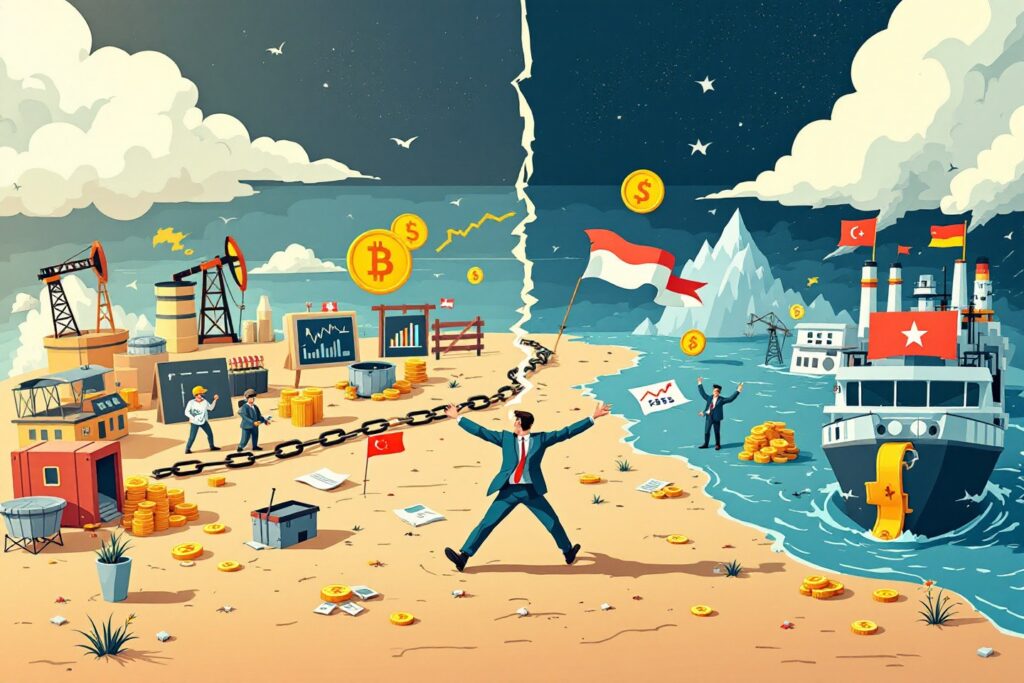
Global financial markets came under renewed pressure as escalating geopolitical tensions and mounting investor anxiety triggered broad-based volatility across equities, currencies, and commodities.
Stock markets in Asia opened lower, with major indices retreating as investors reacted to fresh developments in ongoing conflicts and growing uncertainty over global economic stability. European markets followed suit, extending losses in early trading as risk appetite weakened and defensive assets gained traction.
Market analysts said persistent geopolitical risks — including conflicts in the Middle East and Eastern Europe, alongside rising tensions in key trade corridors — are weighing heavily on investor sentiment. Concerns over potential disruptions to energy supplies and global trade flows have added to fears of prolonged economic uncertainty.
Wall Street futures indicated a cautious opening, with investors shifting funds increasingly toward safe-haven assets, such as gold and government bonds. The US dollar strengthened modestly against several major currencies, reflecting demand for perceived stability amid global turbulence.
Energy markets also saw sharp movements. Oil prices fluctuated as traders assessed the risk of supply disruptions, particularly in strategically important regions. While prices remained volatile, analysts warned that any further escalation could drive energy costs higher, fueling inflationary pressures worldwide.
Investor focus has also turned to central banks, with markets closely watching how policymakers respond to renewed inflation risks linked to rising energy prices and supply chain instability. Expectations of interest rate cuts in some major economies have softened, adding another layer of uncertainty to market outlooks.
In emerging markets, currencies and equities faced additional pressure as foreign investors pulled back amid risk-off sentiment. Economists cautioned that prolonged instability could strain capital flows and slow growth in vulnerable economies already grappling with high debt and inflation.
“Markets are being driven more by headlines than fundamentals at the moment,” one market strategist said, noting that geopolitical uncertainty has become a dominant force shaping short-term trading behavior.
As global tensions show little sign of easing, analysts expect market volatility to remain elevated in the coming weeks. Investors are likely to stay cautious, balancing economic data against geopolitical developments that continue to reshape the global financial landscape.
For more such articles, please follow us on LinkedIn and Instagram.